SmartForest 2026: Highlights and Lessons Learned


The Lead-Up
In March 2025, we organised the first SmartForest conference. We wanted to connect different professional domains within forestry, make digitalisation, AI and other innovations have practical impact, and to help build a strong digital ecosystem.
That latter point is our DNA, as expressed in wetransform’s mission statement:
By building open data ecosystems, we transform how data is shared, accessed, and used for the common good.
In doing so, we empower individuals and organisations to make sustainable and future-oriented decisions
The community’s feedback from SmartForest 2025 was overwhelmingly positive, so we very quickly decided to repeat the experience. We knew that, unlike 2025, we would not have any institutional funding for a 2026-edition of the conference, but set ambitious goals nonetheless. We assumed we would be able to re-use much of what we created and should therefore be able to run a lean organisation.
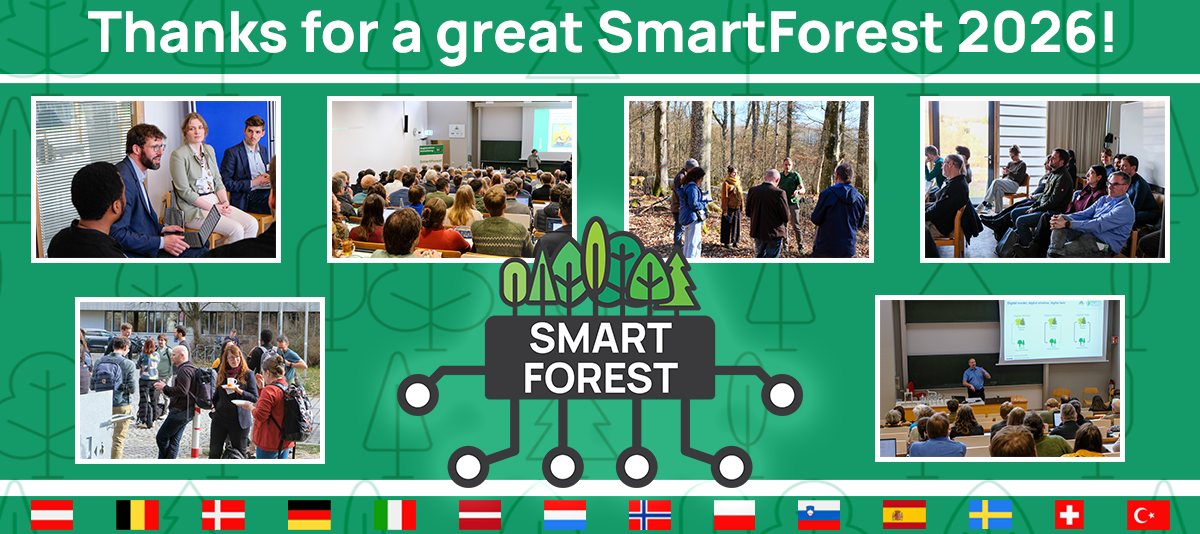
In the end, that assumption didn’t hold – we did manage to re-use many things, but our success also meant that the conference’s attendance grew from 150 to 240 people. These people had the opportunity to attend over 60 presentations, selected from almost 90 proposed contributions. Managing so many moving parts was challenging and the organisational team put in a great deal of effort to make the conference run smoothly.
So Many Highlights
Keynotes
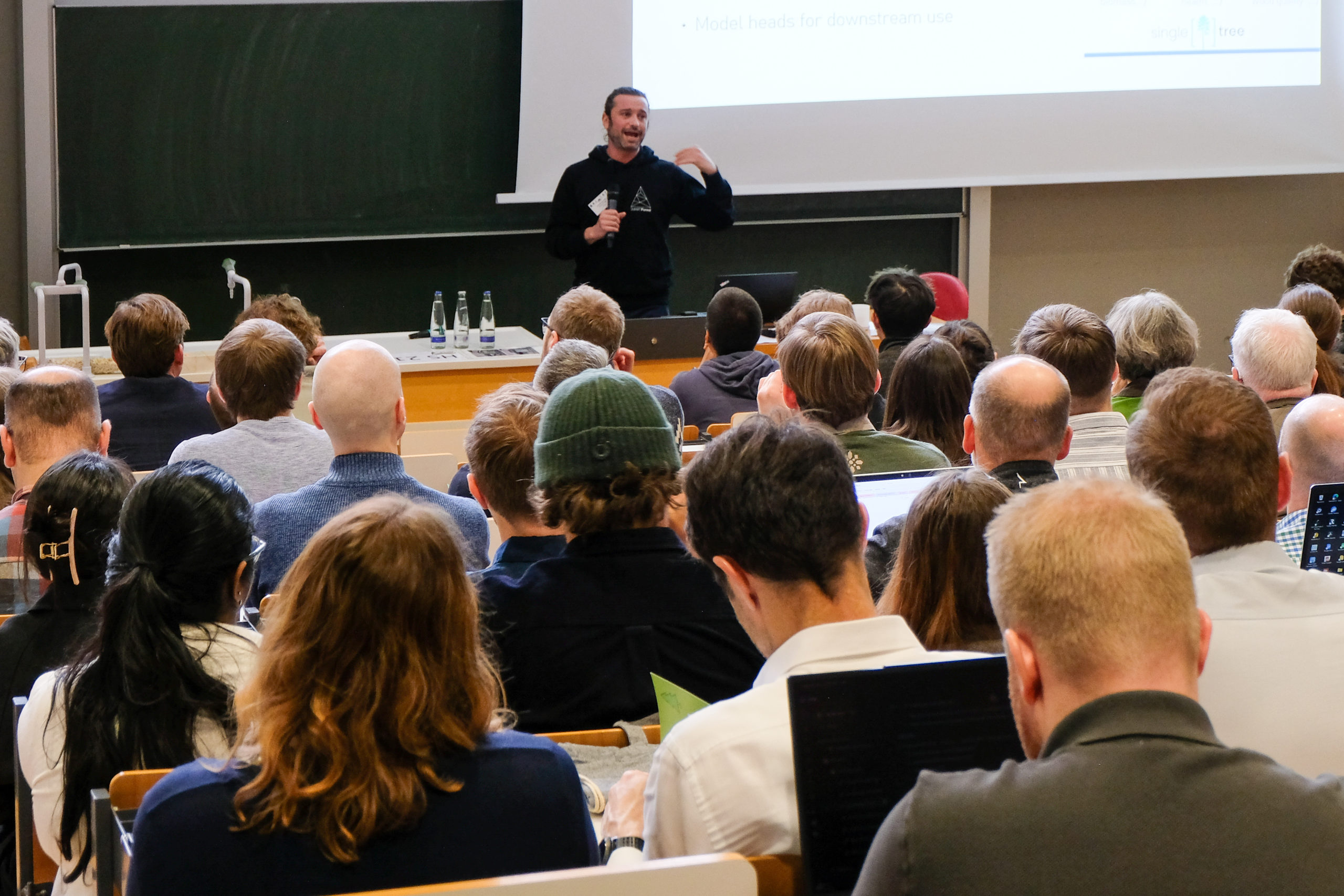
Choosing the right keynotes is important to set the tone for a conference. They can provide input that sparks engaged discussions and frames current challenges in a constructive and deeply insightful way. This year, we opted for a total of five keynotes:
- Stefano Puliti, researcher at the Norwegian Institute of Bioeconomy Research (NIBIO), explained how the application of artificial intelligence to 3D data sets allows us to rethink forest ecosystem understanding and management.
- Thorsten Reitz, CEO of wetransform, talked about the success factors of digital ecosystems and presented first findings on how the forest community measures up
- Günther Bronner, CEO of Umweltdata Gmbh, explored the conflicts of digitalisation applied to analogue processes.
- Thomas Breunig (Freiburg Forestry Directorate) and PD Tobias Schlechtriemen (Albert-Ludwigs-University Freiburg) gave a thought-provoking presentation about how transformation can only succeed if technological and societal change go hand in hand.
- Prof. Dr. Cornelius Senf of the School of Life Sciences, Weihenstephan provided an in-depth update on the state of the art and next steps for earth observation in European forest monitoring.
Split between two neighbouring lecturing halls, these keynote speeches catered to both the German and English tracts of this international event.
Outdoor Sessions
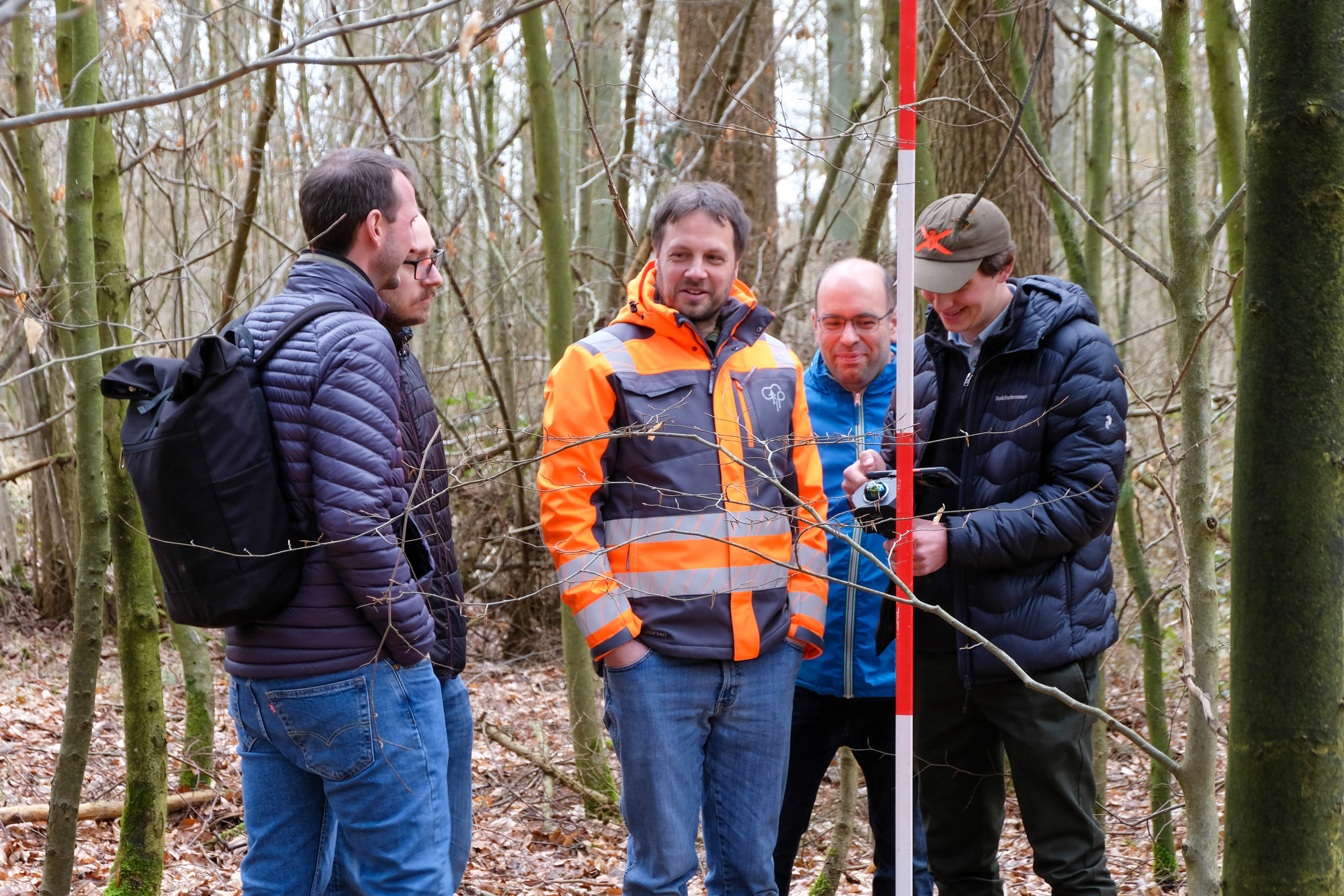
One idea we took with us from 2025 were the outdoor sessions. These offer conference participants a hands-on opportunity to learn about practical innovations and tools on the conference grounds and in the nearby forest.
While the first SmartForest only had one, this year we were able to offer a total of five outdoor sessions.
As an example, the outdoor session "Smart im Wald" by palos GmbH walked participants through three mobile tools:
- The palos app, for day-to-day field operations
- Arboreal, for faster sampling inventory
- FOVEA, for photo-optical timber measurement
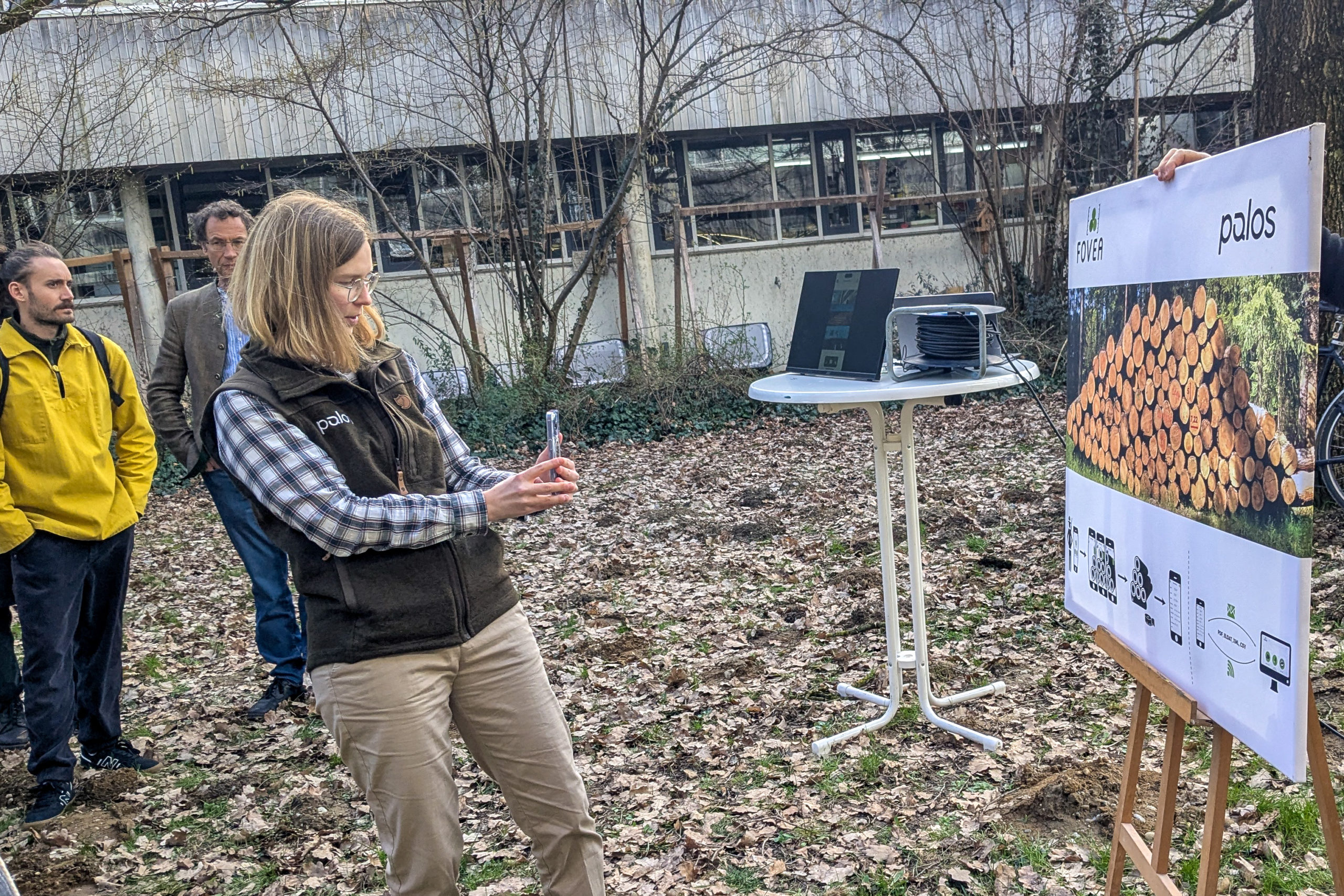
The banner showing a log pile that had been set up for the FOVEA demonstration was promptly knocked over by the wind, turning it into an unplanned but fitting test of field conditions. Questions from participants centred on accuracy and reliability: does this work offline? How precise is it really? What happens when things don't go to plan?
Interactive Formats
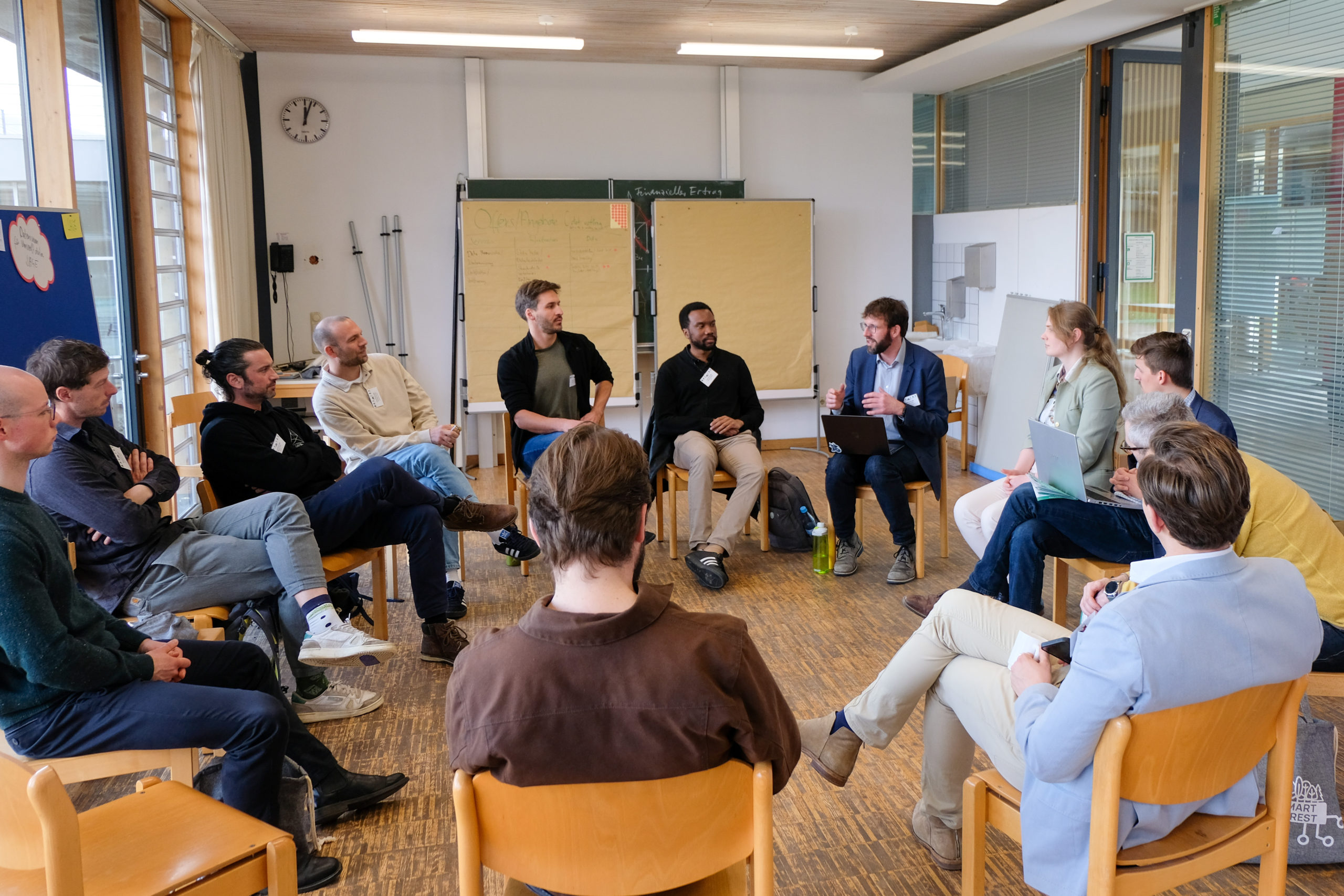
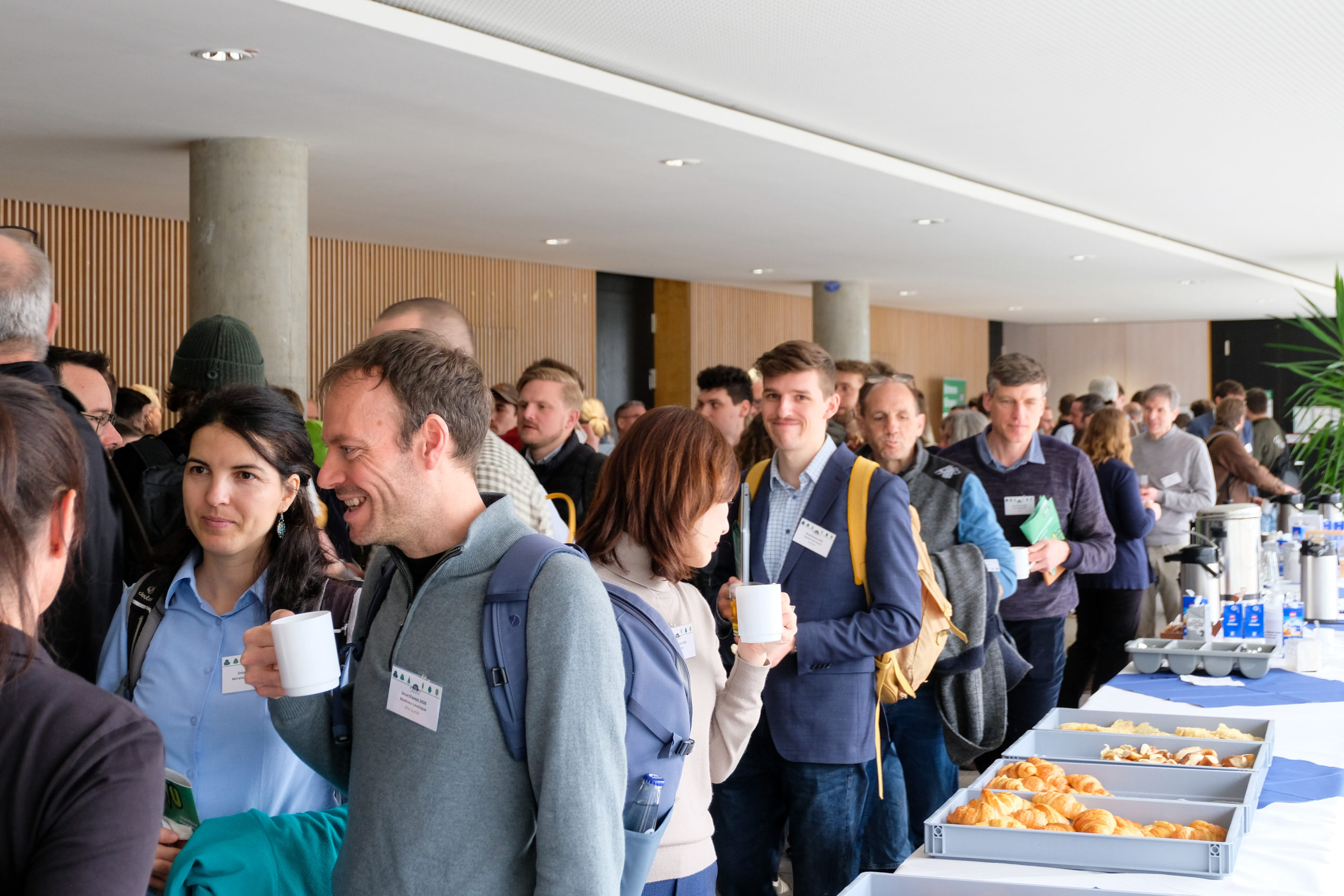
Interaction is central to the conference. Not only did we increase the time for breaks in between programme blocks for unstructured connections and discussions, we also added new interactive session formats.
World Cafes

World Cafes are a well-established form of setting up and moderating open, inclusive discussions around a set of topics. At SmartForest 2026, we offered a wide range of World Café tables:
- Dr. Lars Waser, Martin Roth, and Prof. Dr. Andreas Rothe focused on practitioner’s requirements for forestry products based on remote sensing,
- A second table, moderated by Aikio Erhardt and Melanie Kirchhöfer, discussed forest protection and vitality
- Thorsten Reitz and Dr. Benjamin Kowalski addressed opportunities for, and challenges in, the digitalisation of European Forestry at table three.
- Finally, Prof. Dr. Fabian Fassnacht and Dr. Petra Adler led the discussion on current challenges and developments for research in the field of remote sensing and digitisation in forestry
Data Ecosystem Laboratory
The other format we tried out was a type of marketplace. The Data Ecosystem Laboratory was an interactive space where participants connected demand and supply for data and digital services.
The laboratory presented three current initiatives that make processes in forestry more digital, efficient, and accessible:
- The Forest Data Space by wetransform
- The DTMForst-Datentreuhänder by KWH 4.0
- The Nature Intelligence Infrastructure by the Future Forest Initiative (FFI)
During the three blocks that the Data Ecosystem Laboratory was open, conference participants dropped in and mostly joined the central discussion already going on in the room. We discussed questions such as what data people need most urgently, where bottlenecks in data exchange are present, and which processes are currently inefficient and should be rethought.
The participants also brought up discussion points of their own, for example:
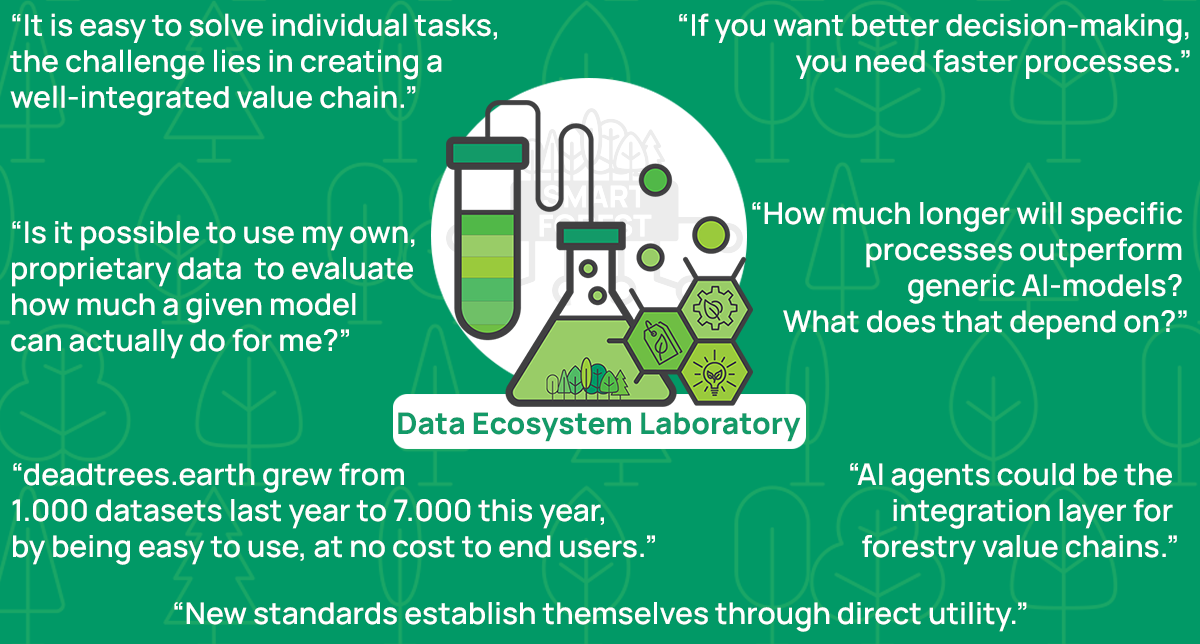
In the end, the session turned out different from what we’d expected:
We didn’t discuss technology, but rather the wider frame in which it is applied to create change.
A Big Thanks
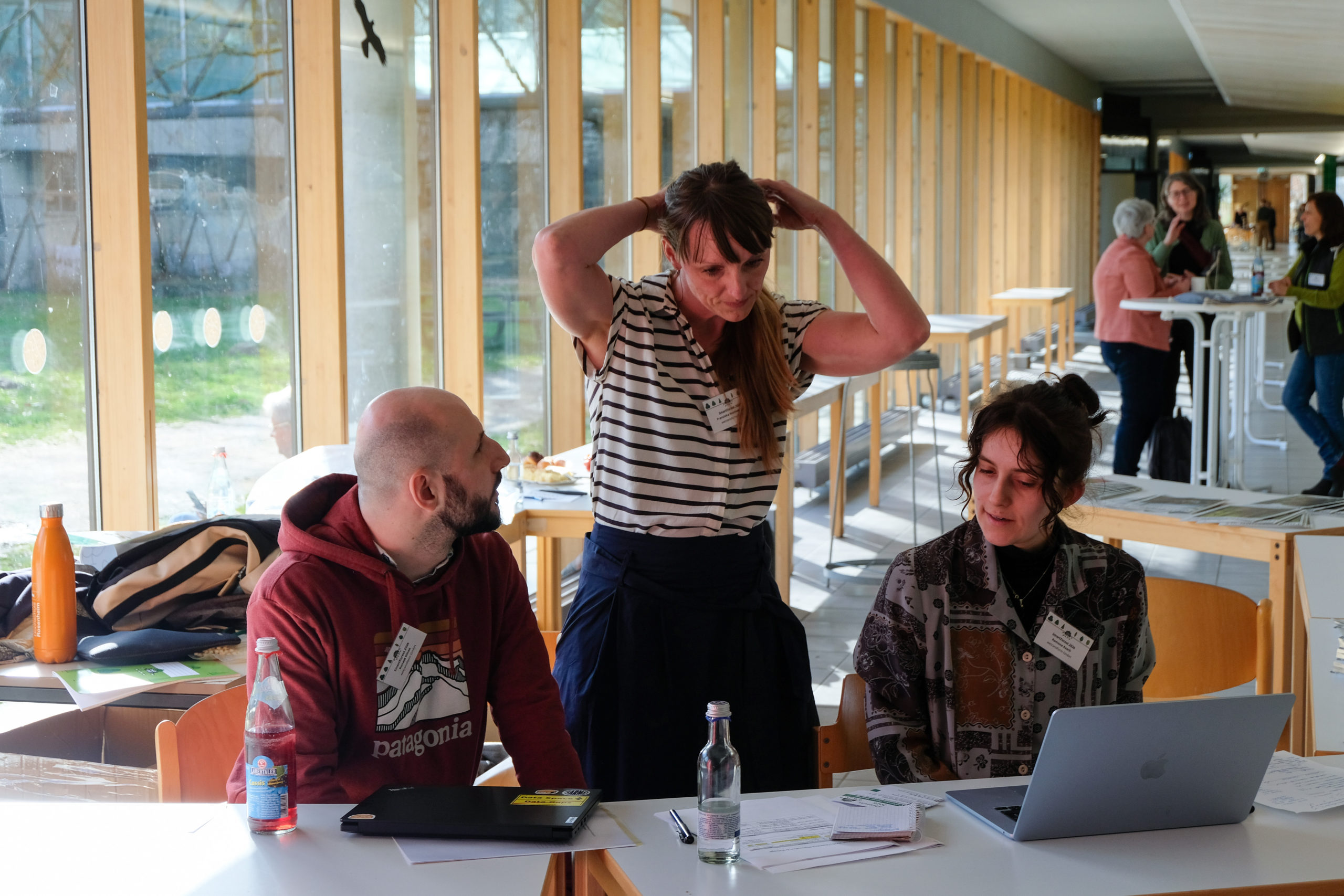
It wouldn’t have been possible to create a conference like this without all of you. I would like to specifically thank:
- The organising committee
- The programme committee
- Outreach partners, such as FFI, FNR, and KWF
- The on-site helpers
- Our host, the Technical University of Munich
- The contributors and presenters
- All the attendees
Conclusions and Initial Feedback
SmartForest 2026, much like its 2025 predecessor, was a great success.
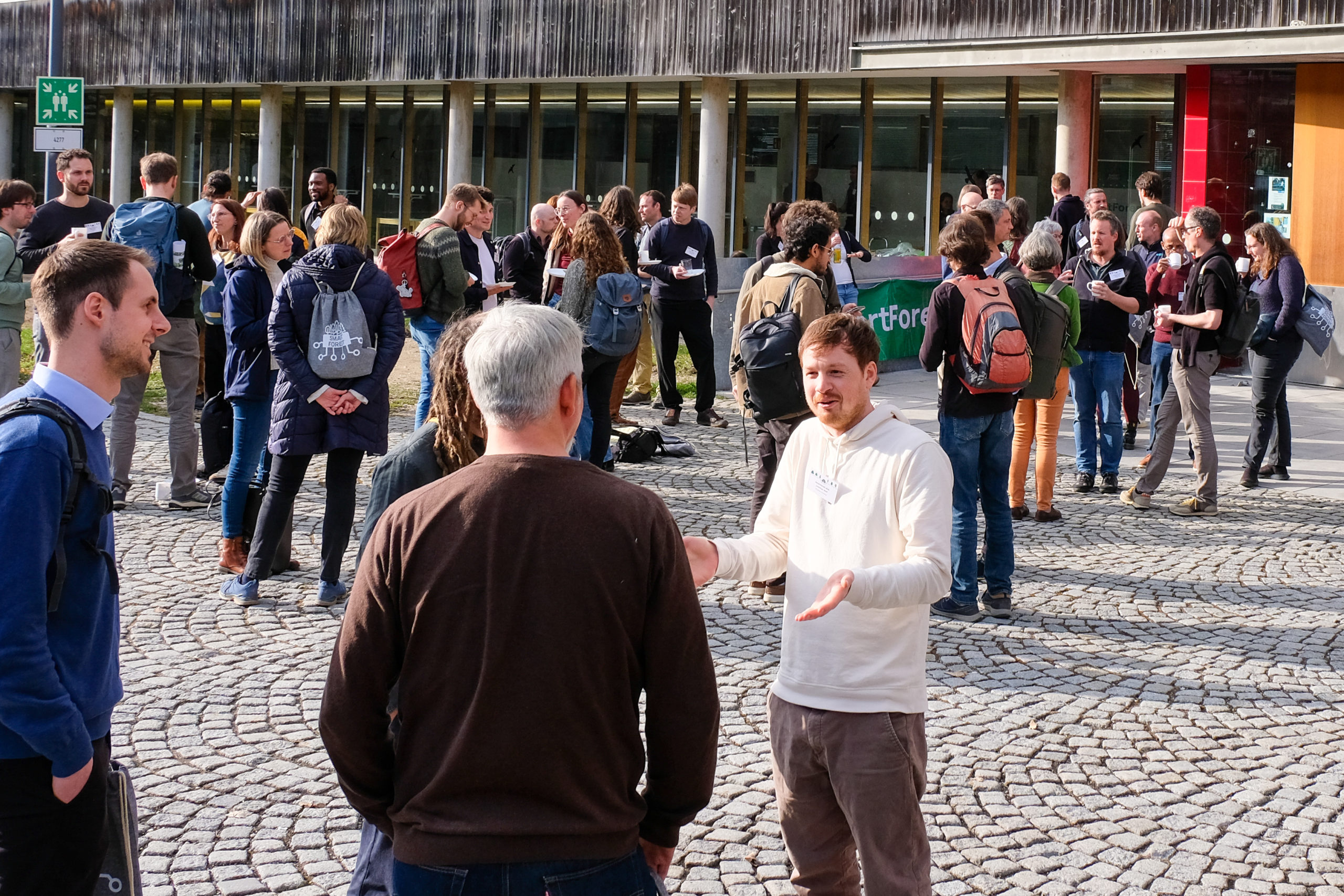
Aided by the friendly spring weather, we connected more people from international science, industry, and forestry practice than ever before and provided them with our largest and most varied conference programme yet. The community has clearly shown that there is a great appetite for SmartForest conferences and seized this opportunity with both hands.
While organising a conference that draws such great interest and spans such a variety of topics is a great challenge, it is most certainly a worthwhile effort to empower the adoption of technological innovation where it can serve the social, economic, and environmental future of our forests.
Outlook
Our main goal is to stay true to SmartForest’s mission: Translate the technological innovations surrounding digitalisation and AI into forestry practice. This is necessary to enable better forestry, at scale, and build an open, fair, digital ecosystem that includes the whole community.
See you in 2027, for an even better third edition of SmartForest!