Data Spaces and the Role of the State: Building Sustainable Data Ecosystems

Over the past few years, substantial private and public investments have gone into data spaces, data trustee models, and digital infrastructure. From a technological perspective, we have made significant progress. Standards, connectors, digital identities, wallets, and governance models are now sufficiently mature to support the development of productive data ecosystems.
And yet, many data spaces are still struggling to transition from pilot projects into real-world adoption. From my perspective, technology is no longer the main obstacle. The decisive challenges are economic incentives, long-term commitment, governance, and the willingness to change established processes.
“The main obstacles to getting data spaces up and running are clearly not technical.”
Against this backdrop, I was interviewed by Jannis Kolb and Jil Siegmund from the Ludwig-Maximilians-University Munich (LMU) in August 2026. We focused on what we can learn from the experience of recent years and what role governments should play in the establishment of data spaces and digital infrastructure. The following is a summary of that interview.
From Open Data to Trusted Data Sharing

When we founded wetransform in 2014, our starting point was relatively straightforward: we wanted to make geospatial and environmental data more accessible and easier to use.
INSPIRE, Open Data policies, and other regulatory initiatives resulted in increasing amounts of public-sector data becoming available. At the same time, we focused on making the infrastructure required to provide and transform these data as efficient as possible—through standardisation, shared platforms, and economies of scale.
At some point, however, it became clear that Open Data alone could unlock only part of the available data potential.
Many particularly valuable datasets cannot simply be published openly because of legal, commercial, privacy, or security considerations. Since around 2019, we have therefore been working intensively on ways to make more sensitive data available for controlled and trustworthy use. In 2020, we joined the International Data Spaces Association (IDSA), and the Forest Data Space became one of our first major data space initiatives.
One insight has repeatedly been confirmed since then: while the technology is complex and, in some areas, still immature, the more difficult barriers are risk aversion, missing business models, institutional constraints, and the question of who is willing to take long-term responsibility for a data ecosystem.
Infrastructure Cannot Be Established Through a Three-Year Project
One fundamental problem is that we frequently try to build up digital infrastructure through research projects. A project receives funding for two or three years. Concepts, software components, governance models, and demonstrators are developed. Then, once the funding runs out, operations often end as well. That model is fundamentally unsuitable for digital infrastructure, which immediately ceases to exist once operations end.
When building a data ecosystem, several questions need to be answered very early on:
- Who will use the infrastructure?
- Who will benefit from it?
- Who value will it create?
- Who will contribute to its long-term financing and operation?
- Who will take responsibility for changing the organisational processes required to make it work?
Our work in the environmental sector adds another challenge. Many activities create significant societal value, but this value cannot easily be translated into commercial business models. Environmental protection, climate action, and resilience are often driven by regulation or by public responsibilities.
This means government is almost always an important stakeholder in these domains. However, that does not necessarily mean that government itself should operate the data space.
Governments as Anchor Customers
There is one model that I believe deserves much more attention: public institutions acting as anchor customers for digital infrastructure.
Instead of funding another temporary project, a public authority could say:
We need this infrastructure. We will become one of its first customers and develop it together with the operator so that it meets our requirements. If it works, we will continue to use and fund it.
This changes the dynamic fundamentally: There is a concrete customer relationship, a defined service, and a long-term perspective. At the same time, the public sector customer can have significant influence over how the infrastructure develops during its formative phase.
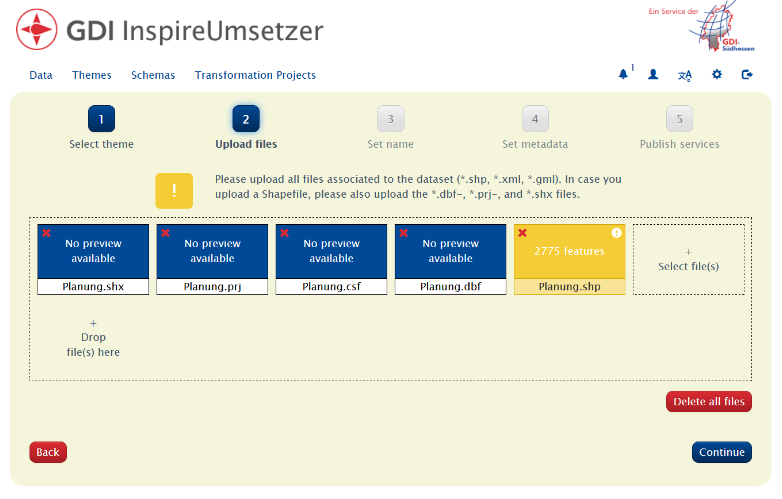
At wetransform, we have experienced first-hand how powerful such a model can be. More than ten years ago, our first customer, GDI Südhessen, took precisely this approach with us. That relationship enabled us to develop new approaches step-by-step under real-world conditions.
Funding programmes remain important for true research & innovation activities as well as pre-competitive, foundational development and standardisation. Problems arise when we expect a permanently operated infrastructure to emerge automatically from a time-limited research project.
Driving Demand Through Legal Incentives
Europe now has many of the technological building blocks required for data spaces. What is often missing is genuine demand for data space services. If Europe wants to create a data ecosystems-based data economy, it should create regulation that incentivises the participation in data ecosystems. Regulation could then create a much more powerful lever here than another round of grants.
Legal frameworks such as GDPR or NIS2 could deliberately make trusted data processing through recognised data trustees or data spaces easier. Particularly for personal, commercially sensitive, or security-relevant data, using a data space could then become an advantage rather than an additional administrative burden.
Similar incentives could potentially be created through tax or accounting rules. If making data available in a controlled ecosystem demonstrably creates economic value, for example, there is a legitimate question as to whether that value could be recognised more explicitly in accounting frameworks.
The underlying principle is simple:
Organisations that allow data re-use in a trustworthy manner should gain a tangible advantage from doing so.
With regulation such as the Data Governance Act, we sometimes saw the opposite: organisations that make a particular effort to handle data responsibly incur additional governance and compliance costs, while those that remain outside such structures do not.
Good Governance unlocks Potential
Shared, transparent governance is indispensable for a data ecosystem. Across different projects, I have repeatedly seen governance structures designed primarily around procedures: Which committees exist? Who is allowed to vote when? Which documents need to be submitted?
Each procedure and deliverable needs to pass the fit-for-purpose check though:
Does this governance help us unlock the potential of the data ecosystem more effectively?
One principle I find particularly important in this context is subsidiarity: Decisions should be made at the lowest possible level. An individual data sharing group should be able to make as many decisions independently as possible. Only when a decision affects other parts of the ecosystem, should it be escalated to a higher level.
Furthermore, a data space or another form of data ecosystem needs room for experimentation. We are still dealing with an emerging market. Governance should therefore define a binding core, including technical standards, fundamental trust requirements, or common usage conditions, while allowing as much flexibility as possible outside that core.
Not Every Decision Should Be Decentralised
There are, however, areas in which standardisation is crucial. Data usage conditions are a good example.
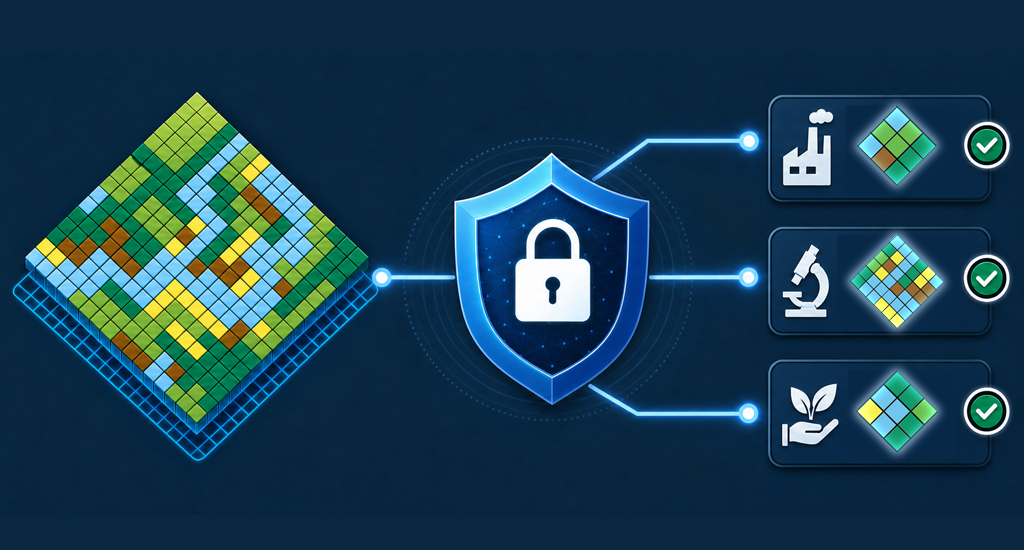
If every data provider defines their own licensing conditions, this may theoretically maximise data sovereignty. In practice, it will create a heterogeneous mess of data that is almost impossible to use.
Anyone trying to combine data from a hundred different sources needs more than technically and semantically harmonised data. The conditions under which those data can be used also need to be unified.
An important governance responsibility can therefore be to define a small number of standardised usage categories. Data providers could choose between clearly understood levels — from a common minimum re-use licence through to additional permissions, for example for training machine learning models. This preserves control for the data holder without creating a bespoke legal framework for every individual dataset.
Infrastructure Requires Maintenance
Digital infrastructure is increasingly expected to be open, transparent, and independent of individual vendors. At the same time, the cost of maintaining and continuously developing those components is often underestimated. We see a very similar sustainability problem as with Free and Open-Source Software (FOSS). If Open Source is to be regarded as a cornerstone of digital sovereignty, we would also need to talk about long-term funding for maintenance, security, and continued development.
hale»studio, our FOSS data transformation tool, is a good example. Keeping the project maintained requires considerable investment. Thousands of users benefit from it, yet there are hardly any mechanisms for sustainably funding the maintenance of software of this kind.
For physical infrastructure, we would find that absurd: Nobody would build a road and assume that it could be used for decades without maintenance. Yet with software, we repeatedly behave as if this were possible.

“If we require Open Source to run our digital infrastructure, we also need a long-term commitment to provide the resources needed to keep critical components at the standard we need.”
Operating Digital Infrastructure is a Discipline of Its Own
Digital infrastructure has two special characteristics compared to other infrastructure:
- It exists only for as long as it is actually operated.
- Operations can generate enormous economies of scale – the more users a system has, the lower the total costs per user.
Data ecosystems derive their value from sharing resources, software, and processes. A platform designed to serve many organisations and use cases can be operated far more efficiently than numerous individually developed solutions.
This approach does require infrastructure to be designed horizontally. If every authority, every federal state, or every organisation develops its own technical solution with its own individual requirements, those economies of scale and the potential network effects of a larger digital ecosystem disappear.
In my view, public authorities should therefore not automatically attempt to operate every component of digital infrastructure themselves. The default approach should be to make use of trustees and data spaces, operated by specialists that can provide infrastructure more efficiently, more scalable, and more sustainable.
Data Spaces Are Not an End in Themselves
The objective is not to build as many “Data Spaces” or other forms of Data Ecosystems as possible. Instead, it is about enabling value-generating transactions and connections.
“Ultimately, it is always about which transactions and connections we enable, and how the digital ecosystem as a whole creates value.”
Sometimes a digital ecosystem lacks data supply. Sometimes it lacks demand. Sometimes the problem is trust. And sometimes there simply is not yet a sufficiently compelling use case.
Technology, governance, and legal frameworks always have to be considered together. Data spaces are valuable precisely because they are a standardised technical and organisational implementation of a digital ecosystem.
For the next implementation phase of Europe’s data space strategy, this leads me to the following conclusion:
We should invest less in new pilot projects and technical development, and instead focus on creating sustained demand, meaningful economic incentives, and long-term operating models. That will help to create the conditions that allow them to become functioning data ecosystems.
If you want to get involved with sustainable data ecosystems, reach out to us!