SEMIC 2025: European Digital Markets at a Crossroads

SEMIC 2025 was the conference’s largest edition thus far. Over 500 participants came together in Copenhagen, while over 3.500 utilised live streams to follow the conference’s goings-on from 65 different countries. More than 100 speakers, myself included, provided their insights surrounding this year’s theme: “Interoperability for Impact”
Digesting my impressions from these two intense days in Copenhagen has taken me a good week. My feelings and thoughts after the event were complicated and I wanted to get a bit of time to consolidate them before publishing my report.
On the one hand, SEMIC was a true highlight:
- I got to present the JRC technical report on interoperability that I consider to be my most important publication to date.
- I got to talk to many like-minded experts with whom it was fun to find and discuss common challenges and approaches.
- I was invited to be part of an extremely well organised event – a big “Thanks!” again to the teams at the European Commission and the Danish Presidency.
On the other hand, SEMIC took place in an environment where society and policy-makers appear largely unable to implement necessary changes.
A lot appears fear-driven. Many utilise or act upon the impulse of people that are scared. That many of us are scared, or at least uncertain, is not surprising considering the “polycrisis” that we get to hear about every hour of every day:
- A critical level of global warming, far exceeding 2.0°C, now seems to be almost inevitable, which will lead to seismic shifts in societies.
- AI tools enable companies to automate more and could make over 10% of the workforce redundant.
- Alliances no longer hold up. There is a loss of global integration and international agreements aren’t worth as much anymore.
- Many issues, such as the rising cost of living (particularly when it comes to real estate and healthcare), effects of migration (both brain drain and lack of integration), ageing populations, insufficient infrastructure, and inefficient public authorities plague many people in western societies, creating a feeling of helplessness.
- Democratic societies become fragmented and polarised around identity battles (who is “in” and who isn’t) and the problems above, making it less and less likely to arrive at a democratic compromise.
A lot of the deregulation that is now discussed as part of the EU Omnibuses and elsewhere will not solve any of these problems. They will, in some cases, reduce burdens, but they will not help to create a truly competitive growth environment.
All the discussion around simplification cannot hide that complexity will never really go away, not in natural systems, nature-based systems, or human-made systems. We certainly see inefficiency and unnecessary complexity, but addressing these will require us to take big steps ahead.
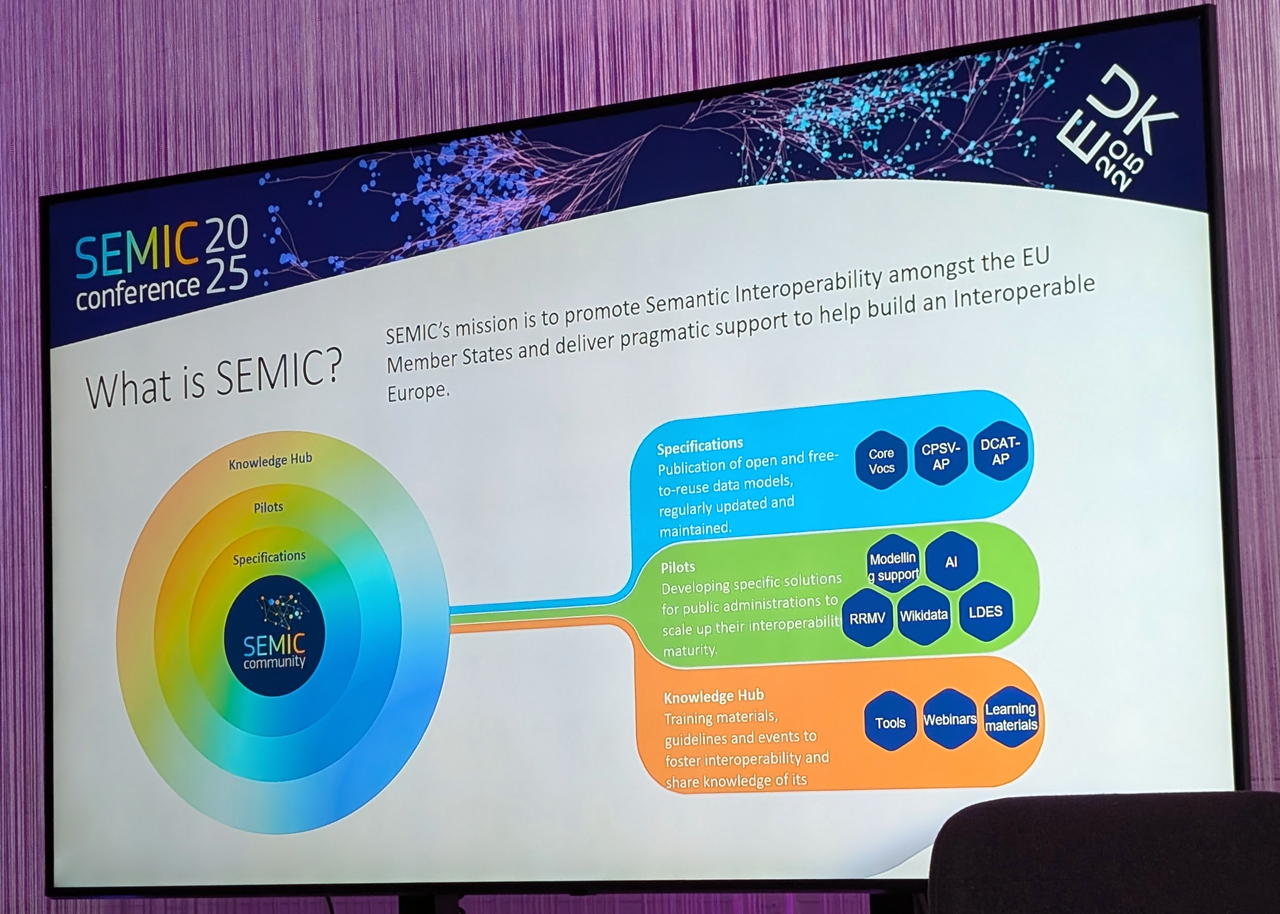
All of that could also be felt at the SEMIC conference, in particular when talking to people involved in policy-making at the European Commission or national levels. I think the experts present are all well aware of what has to be done and presented strongly worded appeals. Francesca Bria delivered an excellent keynote that truly drove the point home that we need to act now, and decisively, if we Europeans do not want to become a colony.
“Sovereignty is not guaranteed anymore by borders, but by who owns data and digital infrastructure. We lose democracy and democratic sovereignty if we do not achieve interoperability to operate at scale and speed.”
The news from the last two days around the new security strategy of the United States and the backlash from the official US and its billionaire caste to the (small) EU penalty for one of their platforms, make it 100% clear that it is time to act:
- Reduce dependencies, create resilience in supply chains, be in control of key digital infrastructure and software.
- Create an efficient EU digital market, with interoperability as the “high speed railways” that enable data to flow.
- Develop efficient, digital services that truly serve the citizens and improve our quality of living. And no, chat control is not that.
The presentations and discussions at the SEMIC conference showed that all of that is fundamentally achievable. To create this reality, it will have to be prioritised, a challenge in a period where a lot of things seem urgent. The following sections highlight my impressions and take-aways.
Day 1 – Workshops
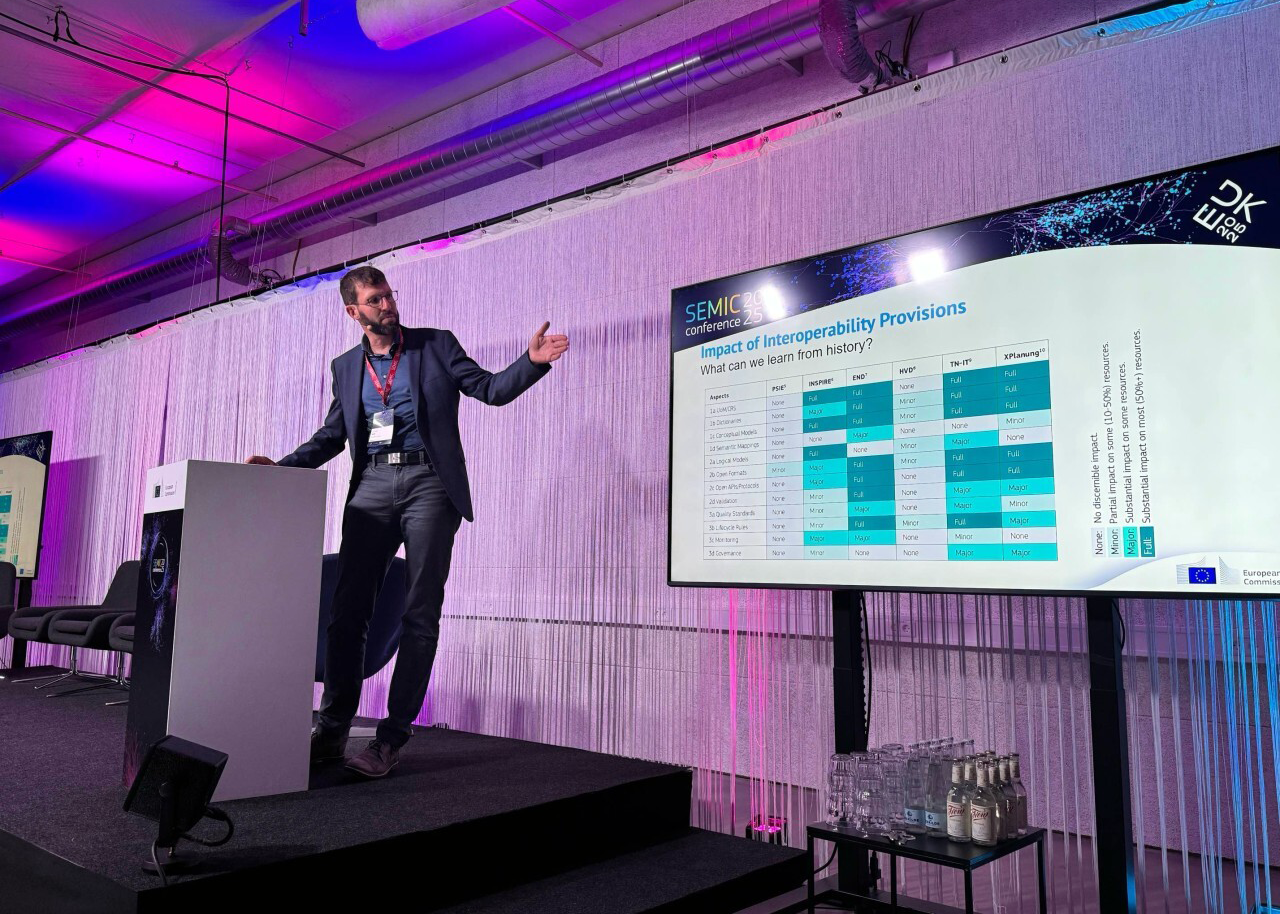
In the workshop on Interoperability in Data Spaces, Mark Dietrich and I presented both my recently released technical report on interoperability for data spaces and the current state of the SAGE Data Space. The report describes the lessons learned from past initiatives, such as INSPIRE, and how to better govern interoperability for the Common EU Data Spaces.
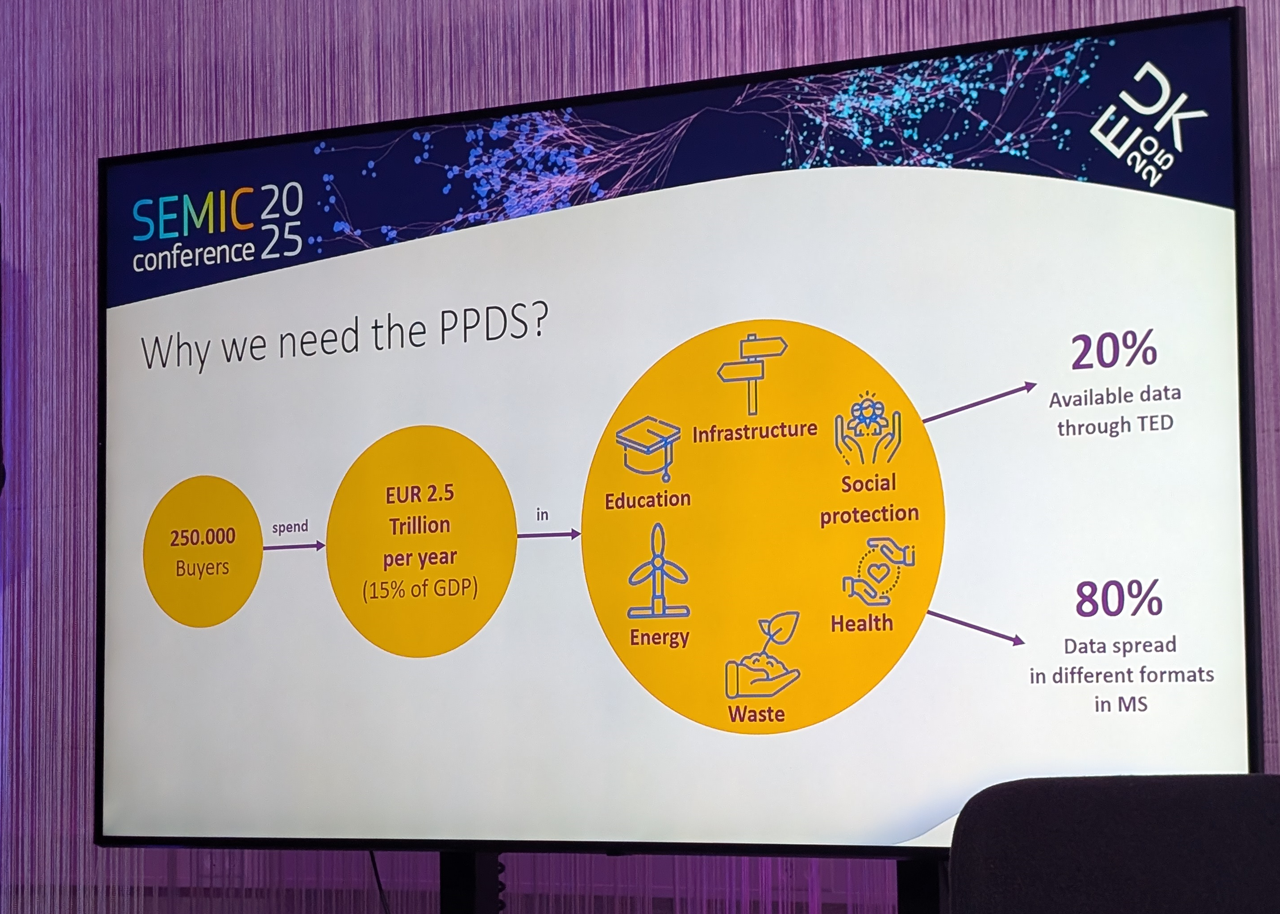
The presentation on the Public Procurement Data Space (PPDS) by David Lucas Reche showed how much potential the approach has. Wouldn’t it be great if tenders from public buyers were of higher quality, more likely to lead to successful outcomes, and be generally less overhead to bid on? All of that would become possible if public authorities across Europe were to collaborate on streamlining requirements and bidding processes, utilising approaches that work across the board. The work currently done in the PPDS is a good first step in that direction, and I hope it will soon be adapted in order to genuinely make the sector more competitive.
The presentation by Leyla El Khamlichi of CompetentNL on semantic graph approaches for better labour market policy showed me just how much potential there is that could be unlocked by using sensitive data in more aspects of our lives. Being able to analyse CVs and other sensitive data at scale would enable far more agility both for policy-makers and for citizens themselves. Looking forward to future developments in this area!
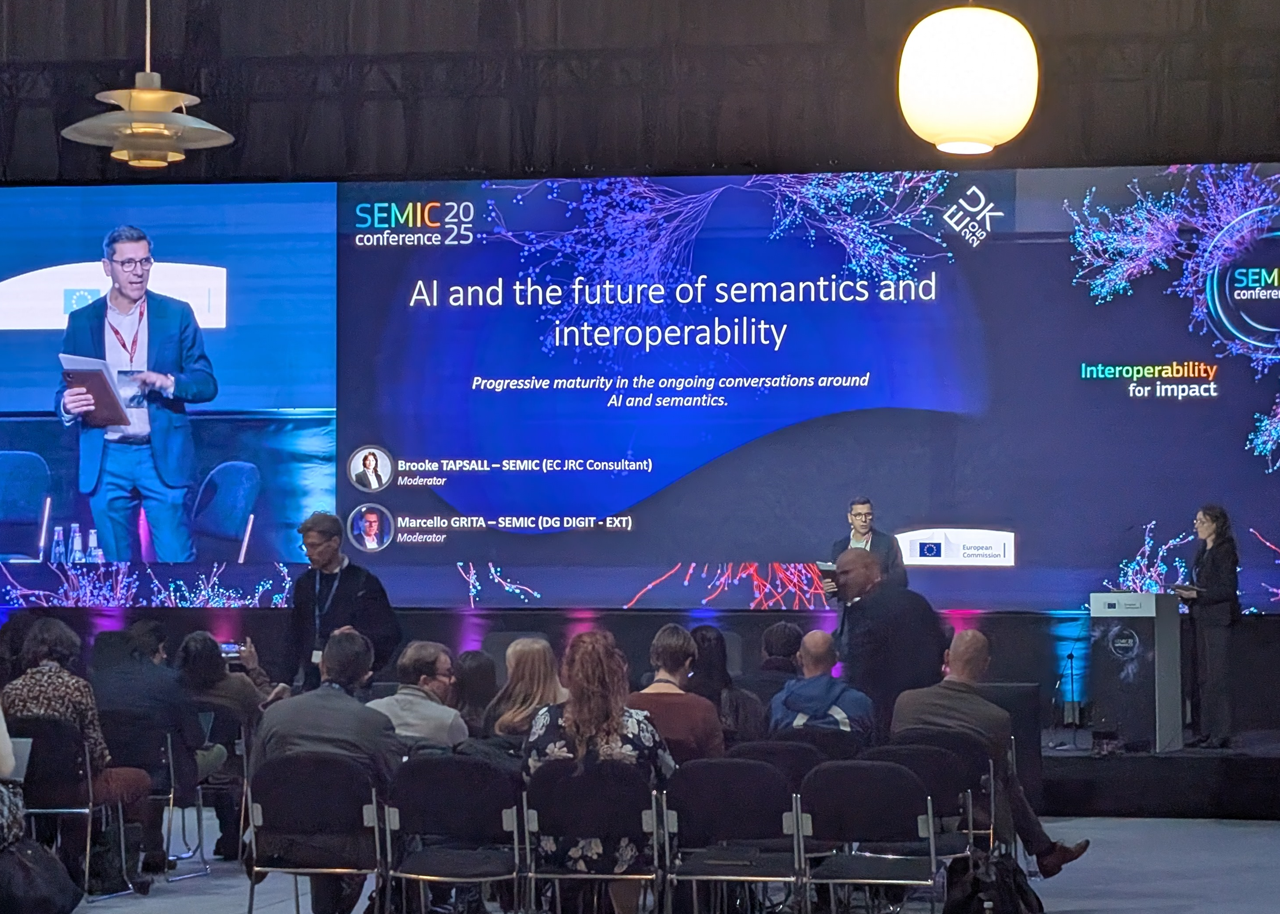
A panel formed the second part of the workshop. The first question asked by Marcello Grita was “Where do we stand and how do we become more interoperable?”. I replied “we’re 7% done” towards the goal of a functional, highly effective data union. One of the main factors to move ahead will be to get commitment from the relevant large actors, such as the national governments and the EC.
Another interesting question was what the most pressing issues for us are. Mark Dietrich said that public goods outputs, such as those generated by the Green Deal Dataspace, require public funding. From my perspective, there need to be clear incentives to convince actors to join. For example, take the Green Deal Dataspace. If the commission simply slashes INSPIRE and removes the data interoperability requirements, without putting a forward-looking, inclusive governance structure into place, a lot of the investments of the past decade will be lost.
My takeaway is that there is a disconnect between the desire for creating interoperability across the European Union, while the political climate favours deregulation and lower degrees of integration. In this light, iterative and efficient ways of achieving sufficient interoperability become key.
Day 2 – Main Conference
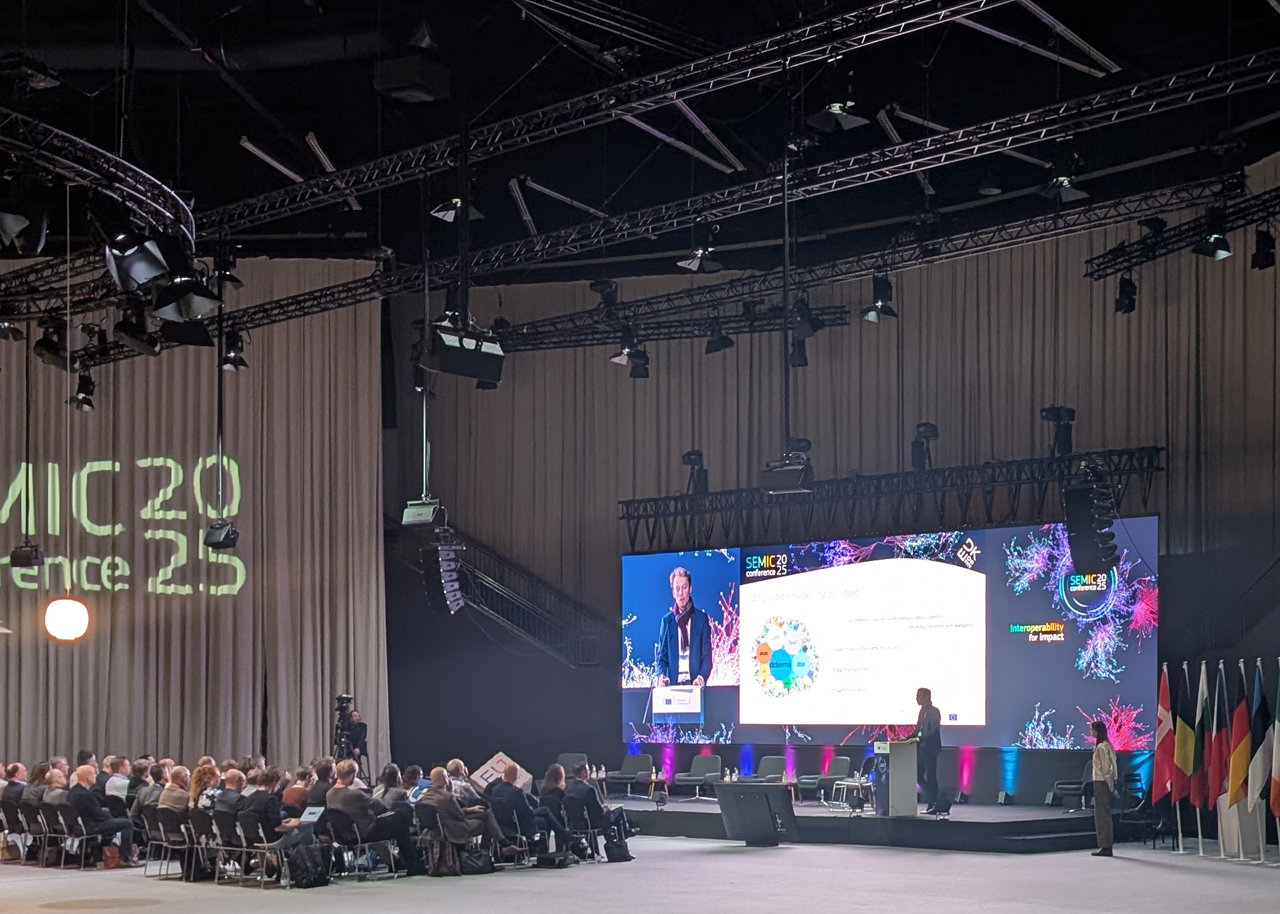
The first couple of panels of the main conference did a good job of demonstrating just how massively interoperability can contribute competitiveness, as it creates a larger single market, fostering new opportunities, and removes barriers to market entry for innovators within the EU.
Francesca’s excellent keynote left me quite impressed and engaged. I’ll add another quote from her:
“We need to build AI that serves our citizens and protects our environment and our democracy.”
Later, the session “Driving Value through GovTech” kicked off with an award ceremony and the opportunity for four groups to present their innovative solutions. I was highly impressed by that of the Ukrainian team. This is a country that has had to reinvent public services with minimal resources. I caught myself wishing that more countries would act with the same braveness and sense of urgency in improving their services.
The panel after the awards was, however, showing how the bubble around IT solutions for the public sector works, and missed the industry and especially the start-up perspective to innovation and scale.
As an example, public authorities tend to consider interoperability a relatively low priority and purchase far too many custom-built silo solutions. Everybody wanting their own silo limits interoperability.
From an industry standpoint, that means mostly rendering IT consulting and services. Public buyers seem to be happy to buy warm bodies, rather than real products that provide sustainable modern solutions, while investment from private sources is limited. My question about what needs to happen for public authorities to push innovative solutions as early adopters for scalable products, instead of buying individual software, was unfortunately left unanswered.
My opinion is that public authorities should continuously utilise a part of their budget to conduct pilots of innovative solutions. They should act as enabling customers to scalable solutions that work across the EU. They should require solutions that are interoperable and support sovereignty. That may include requiring the use of data spaces or data trustees to reduce lock-in, and it certainly requires common, unified security standards to achieve NIS2 without massive costs. They should also stop putting out massively underspecified tenders and then expecting fixed prices in response.
Conclusion

However, even with this somewhat gloomy global outlook, I want to end with a concrete call to action to the almost 4.000 SEMIC participants and the millions beyond:
- If you are buying solutions, require interoperability, portability and sovereignty at every level – infrastructure, data, processes.
- If you are building solutions, become part of open ecosystems instead of constructing proprietary moats and build for scale.
- And on both sides, be bold, think big: Enable solutions that really transform how public services work for societies across all of Europe, by fully utilising data, AI, and by working with innovators such as start-ups.
- Treat the existing legal framework, such as the Data Governance Act, as an enabler to do things the right way, e.g. by building on data trustees, intermediaries, and data spaces, instead of as an excuse to not do things.
- Follow the example of Ukraine and move fast to make things significantly better. As Alexander Stubb just wrote, “The liberal, rules-based order that arose after the end of World War II is now dying.”, and we may well have our last chance in the next few years to build a Europe that is strong enough for the future that is upon us.
I think we all have more agency than our environment makes us think we have at this time. So, let’s not be discouraged and make Europe interoperable, together!